TradingKey - As of the Asian session on September 2, international oil prices surged, with WTI crude (USOIL) reclaiming $90, and Brent crude (UKOIL) rising above $95, reaching a high of $97.04; meanwhile, gold prices (XAUUSD) continued to fall, with spot gold dropping to around $4,300. The further escalation of the U.S.-Iran conflict drove up energy prices and global bond yields, becoming the primary trading driver in the commodities market.
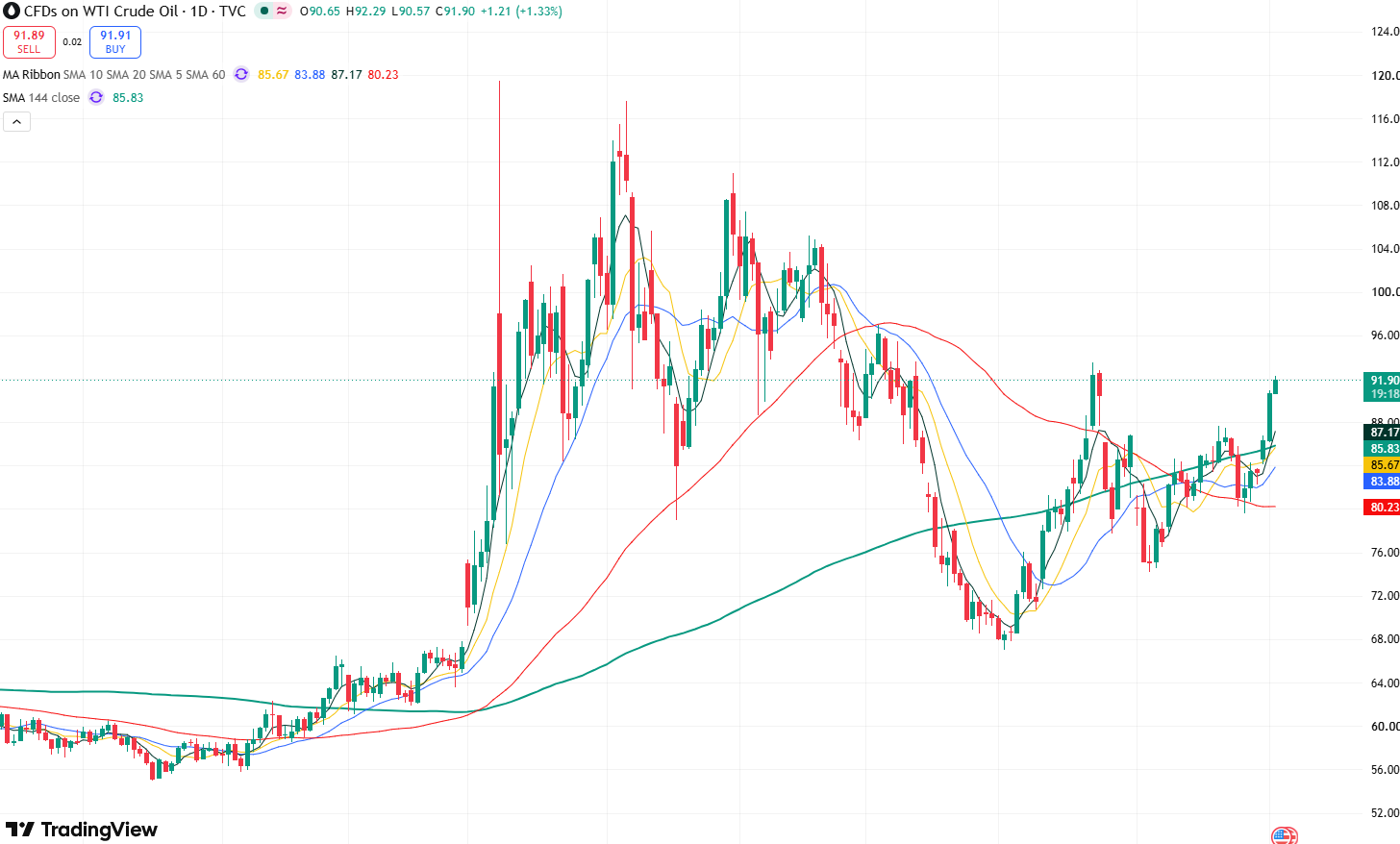
WTI Crude Oil Price Daily Chart, Source: TradingView
On the crude oil front, a new round of U.S. airstrikes against Iranian targets reignited market concerns over disruptions to oil shipments through the Strait of Hormuz. Previously, two oil tankers were attacked as they left the Strait of Hormuz, while Iran warned it could block oil exports from the Gulf region. Supply risks pushed oil prices rapidly higher, with WTI crude rising 5.09% on Tuesday to close at $90.69, and Brent crude gaining 4.98% to close at $95.20 per barrel, both marking their highest closing levels in five weeks.
Analysts noted that if the U.S.-Iran military conflict continues to expand and further impacts shipping in the Strait of Hormuz, global crude oil supply could face greater pressure.
The rapid rise in oil prices exacerbated market concerns about a rebound in inflation, driving U.S. Treasury yields and the U.S. dollar higher. The 10-year U.S. Treasury yield rose to around 4.8%, further heating up market expectations for a Federal Reserve rate hike in September. As of now, rate futures indicate an approximately 67% probability of a 25-basis-point rate hike in September. With both yields and the dollar advancing in tandem, non-yielding gold remained under pressure.
Find out more